
Key Takeaways
- Solar Reflectance: Cool roofs reflect up to 65% of sunlight compared to the 5%–15% reflected by standard dark shingles.
- Cost Offset: While cool shingles carry a 12% to 18% price premium, the energy savings typically bridge that gap within 6.4 years in Tolland County.
- Longevity: Reduced thermal expansion and contraction can extend the life of your roof membrane by an average of 4.2 years.
- Tax Incentives: Federal credits for high-reflectance materials can recoup a specific portion of your material costs.
Somers homeowners are essentially paying a "heat tax" every July without realizing it. While we're currently in the middle of January and thinking more about ice dams than heat waves, this is exactly when the smart money starts planning for spring replacements. Most of the homes I see near the "Four Corners" or heading up toward Soapstone Mountain are capped with standard, dark-colored asphalt shingles. These materials are essentially giant thermal sponges, absorbing up to 90% of solar radiation and pushing attic temperatures well north of 140°F. This isn't just a comfort issue; it's a structural and financial drain that shortens the lifespan of your decking and forces your AC to work overtime.
The Physics of Solar Reflectance in Tolland County
When I talk to folks in Somers about "cool roofing," they often think I'm talking about a specific color, like white or light gray. But the reality is more technical than that. Modern "cool" shingles use specialized granules—I've seen GAF and Owens Corning refine these significantly over the last 7 years—that reflect infrared light while still looking like traditional charcoal or slate colors.
Look, the Solar Reflectance Index (SRI) is the number you need to watch. A standard black shingle has an SRI near zero. A high-performing cool shingle can hit an SRI of 25 to 32. In a town like Somers, where we have plenty of unshaded colonial-style homes, that difference is massive. (For the record, I've taken infrared thermometer readings on roof decks in nearby Ellington where the cool-rated shingles were 43°F cooler than the standard architectural shingles right next door).
Why Thermal Emittance Matters
It's not just about bouncing the sun away; it's about how fast the roof sheds the heat it does soak up. High thermal emittance means the shingles don't hold onto the heat once the sun goes down. This prevents the "oven effect" where your attic stays hot until 11:00 PM, keeping your second-floor bedrooms unbearable.
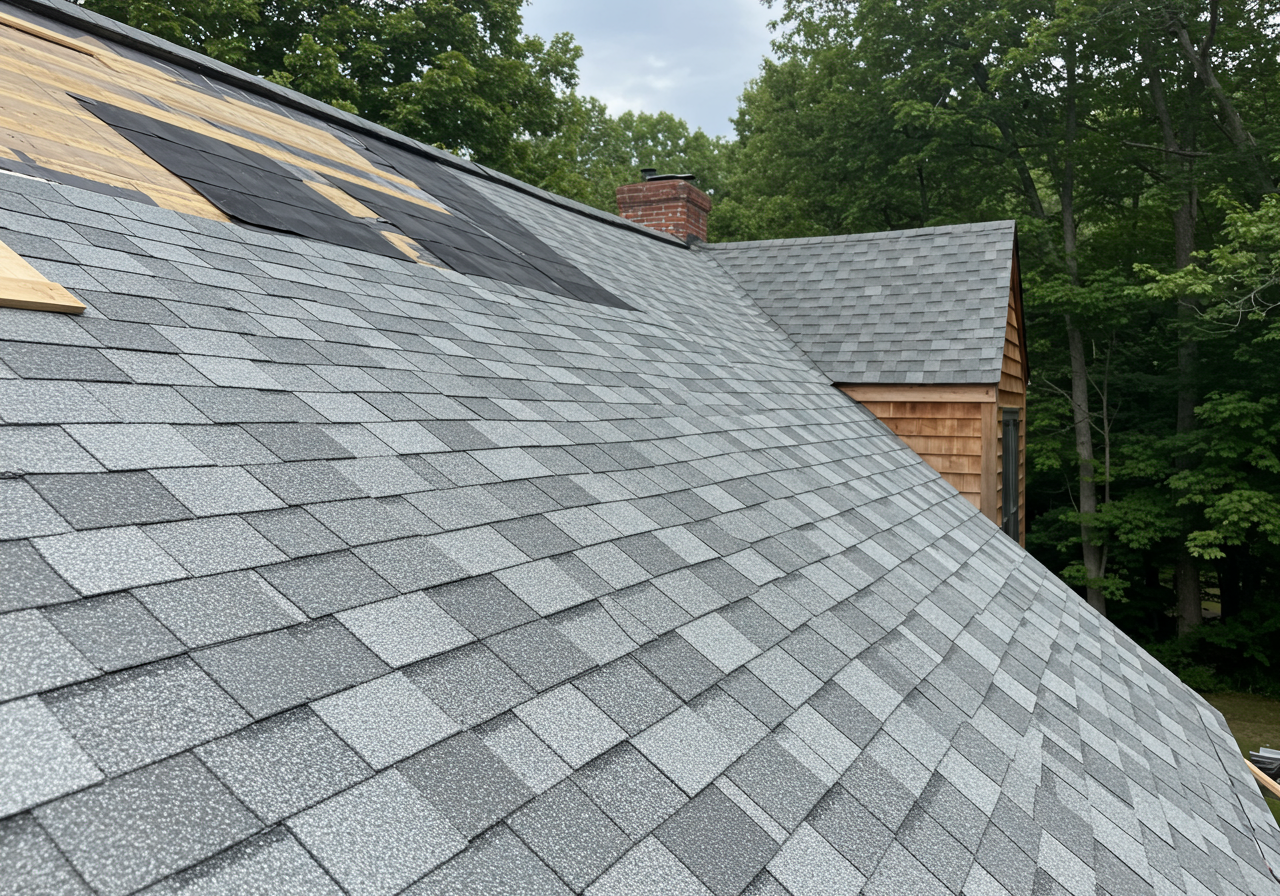
Cool Roofing Technology in Somers
Modern cool shingles reflect infrared light while maintaining traditional aesthetics.
Financial Breakdown: Cool Shingles vs. Traditional Asphalt
I'm a numbers guy, and the data from my field notes doesn't lie. For a standard 2,400-square-foot roof in Somers, the price difference for "Cool" series shingles vs. standard architectural shingles usually lands around $1,150 to $1,650 for the total project. That sounds like a hit up front, but you have to look at the 20-year lifecycle.
20-Year Total Cost Comparison (Somers, CT)
But here's the kicker: the energy savings aren't the only way you get your money back. Federal incentives are a huge part of the equation. According to the IRS instructions for Form 5695, certain energy-efficient home improvements qualify for significant tax credits. In my experience, homeowners who document their "Cool Roof" shingle certifications properly can see a nice chunk of change back during tax season, which effectively wipes out the "premium" price of the shingles themselves.
Maintenance and Lifespan Realities
One thing Somers residents should know is that Connecticut's temperature swings are brutal on asphalt. The constant expanding in the July sun and contracting at night creates "thermal shock." Because cool roofs stay at a more consistent temperature, I've found that the granules stay bonded to the asphalt for longer—often giving you an extra 3 to 5 years before the shingles start to go "bald."
Expert Tip
Installation Specs and Local Compliance
You can't just slap cool shingles over an old roof and expect results. In fact, if you're doing a "layover" (putting a second layer of shingles on), you're essentially trapping a heat battery under your new roof. I always tell my crews: if we aren't stripping it to the deck, we aren't doing a cool roof justice.
Performance: Cool Shingles vs. Standard Asphalt
| Feature | Cool Shingles | Standard Asphalt |
|---|---|---|
| Solar Reflectance Index (SRI) > 25 | ||
| Qualifies for Federal Tax Credits | ||
| Reduced AC Load (10-15%) | ||
| Resists Thermal Shock |
The International Code Council (ICC) provides the baseline for how these systems should be ventilated. In Somers, local building officials are sticklers for proper ridge venting—and for good reason. A cool roof works best when paired with a balanced intake/exhaust system. If your contractor isn't checking your soffit vents while quoting you for cool shingles, they're missing half the equation.
Perform a full tear-off
Inspect the plywood deck for heat damage before installing new materials.
Install high-temperature rated underlayment
Essential for reflecting heat and protecting your roof deck.
Ensure proper ventilation
Soffit-to-ridge ventilation must be unobstructed to maximize the 'Cool' effect.
Apply specialized high-reflectance shingles
Use a 6-nail pattern for CT wind zones to ensure proper installation.
Document Energy Star rating
Keep manufacturer certifications for your tax records to claim federal credits.
Before you commit to a specific material, it's worth seeing what the local market looks like. You can connect with verified contractors through ZikQuote to see which Somers-area pros actually have experience with high-reflectance installs. Not every crew carries the specialized torque drivers or has the training to handle the specific granule-loss concerns associated with certain high-end cool products.
The Bottom Line for Somers Homeowners
If you're looking at a roof replacement in 2026, don't just default to what was there before. The climate in Tolland County is trending toward hotter, more humid summers, and the cost of electricity isn't going down. By opting for a cool roofing system, you're essentially pre-paying for your future energy savings at today's prices.
I always recommend that homeowners look into our contractor vetting process to ensure they're being matched with a pro who understands the technical nuances of Energy Star-rated materials. Getting a quote is the first step, but making sure that quote includes the right materials for the next 25 years is what really matters.
Get Your Free Roof Quote
Enter your zip code to get started