
Key Takeaways
- Real cedar shakes offer unmatched aesthetic appeal but require professional maintenance every 5-7 years at $1,400-$2,200 per treatment.
- Synthetic composites provide 50-year warranties and zero moss/algae growth, making them ideal for Haddam's humid, shaded conditions.
- The maintenance gap is significant: unmaintained cedar may only last 19 years, while synthetics consistently reach their 50-year rating.
- Both materials require specialty installation—never hire a general contractor who doesn't understand wood expansion or synthetic flashing requirements.
While one neighbor might swear by the timeless, rugged charm of hand-split Western Red Cedar, another is likely eyeing the latest synthetic composites that promise the same look without the "weekend-warrior" maintenance schedule. In Haddam, where our homes often sit tucked against the lush backdrop of the Connecticut River valley, the choice isn't just about price—it's about how your roof handles our unique mix of heavy shade and salt-tinged humidity. I've seen gorgeous 18th-century colonials lose their luster because of moss-heavy shingles, while modern builds down the street use polymer shakes that look surprisingly authentic from the curb. Deciding between the organic "silvering" of real wood and the bulletproof reliability of engineered materials requires a clear-eyed look at what you're willing to live with for the next 30 years.
1. The Design Soul of Real Cedar Shakes
There is something genuinely soulful about a real wood roof. Last February, I walked a property near the East Haddam Swing Bridge where the cedar shakes had aged to that perfect, driftwood gray. It felt like it belonged to the landscape. Real wood offers a texture and "shadow line" that is incredibly difficult to replicate perfectly. Because every shake is unique, the roof has a rhythmic, organic imperfection that screams high-end craftsmanship.
But here is the trade-off: that beauty is fleeting if you don't care for it. I always tell my friends that a cedar roof is like a luxury car—it's a design statement, but you can't just "set it and forget it." If your home is surrounded by the dense oaks and maples common in Middlesex County, you have to be prepared for the organic debris that loves to settle in those deep grooves.
2. Weathering the Middlesex Shoreline Humidity
Haddam's climate is a double-edged sword for wood. We get the beauty of the seasons, but we also deal with high moisture levels that can turn a wood roof into a petri dish. According to FEMA's hurricane mitigation guide, sloped roofs in coastal-adjacent areas like ours need specific fastening patterns to survive high-wind events.
Real cedar expands and contracts. It breathes. However, when it stays damp for too long—especially on the north-facing side of a shaded house—you start seeing that tell-tale green tint of algae. I once helped a homeowner who ignored a small patch of moss; within three seasons, the moisture trapped underneath had rotted the strapping. Synthetics, on the other hand, are non-porous. They don't care if it rains for six days straight in April.
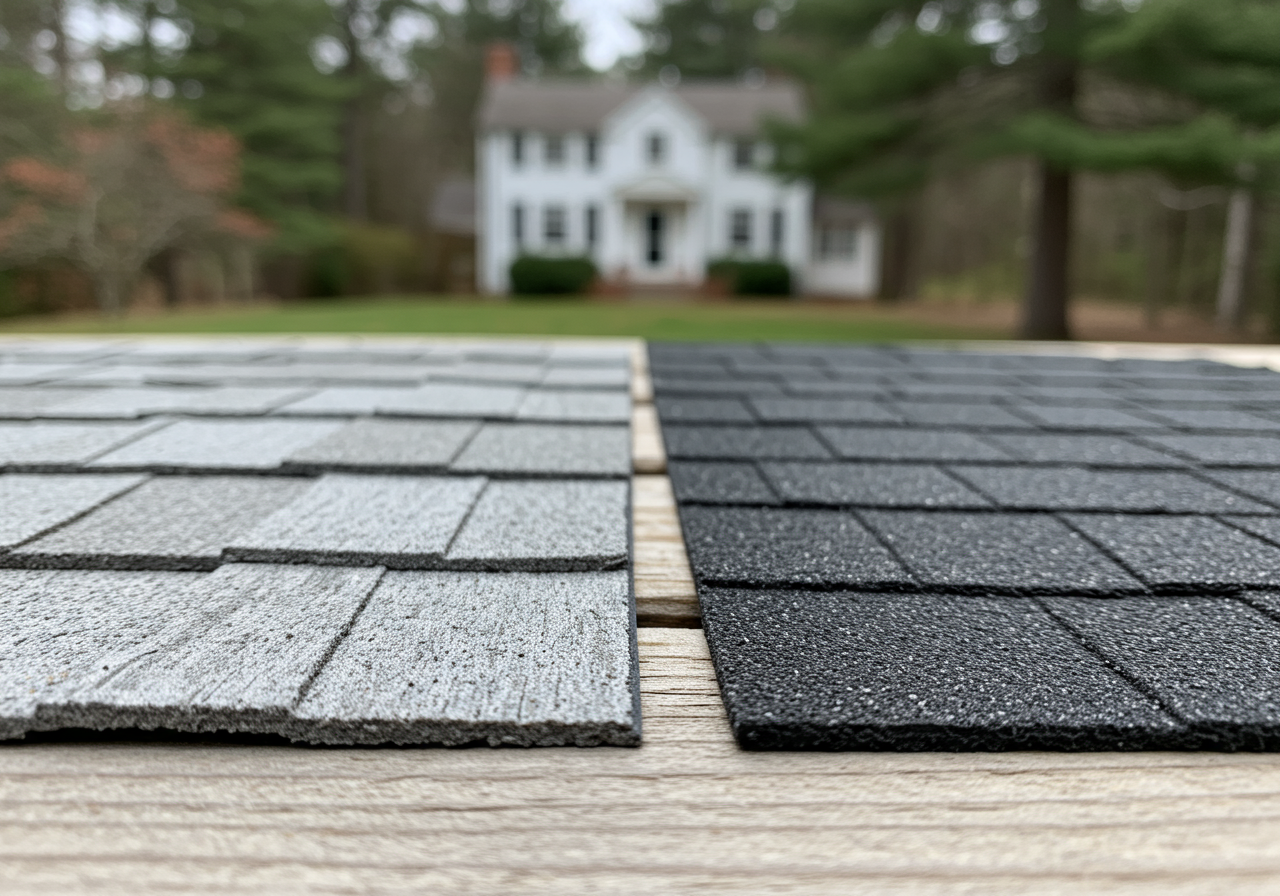
Cedar vs. Synthetic Roofing Comparison in Haddam
Comparing the aesthetic appeal and maintenance requirements of real cedar shakes versus modern synthetic composites for Connecticut River valley homes.
3. The Maintenance Gap and Hidden Costs
Let's talk about the "hidden" workload. A real cedar roof in Connecticut should be professionally cleaned and treated every 5 to 7 years. You're looking at roughly $1,400 to $2,200 for a deep cleaning and preservative application. If you skip this, your 30-year roof might only last 17 years.
Why Haddam Homeowners Choose Synthetic Shakes
Pros
- Zero moss or algae growth
- Class 4 impact rating against hail
- Usually carries a 50-year warranty
- Fire-resistant without extra chemicals
Cons
- Higher upfront material cost
- Lacks the natural scent of cedar
- Some lower-end brands look 'plastic-y'
I've noticed that busy families in our area are increasingly leaning toward brands like DaVinci or Brava. They want the aesthetic of a $40,000 roof without the $400-a-year mental load of checking for split shingles after a heavy snow. If you're trying to figure out if your budget allows for high-end materials, you can calculate your estimated project costs to see where the numbers land for your specific square footage.
4. Lifespan and the 32-Year Reality Check
On paper, cedar is a "lifetime" material, but in the Northeast, its lifespan is highly variable. I've seen real shakes fail at year 14 because of poor ventilation and I've seen them look great at year 35. Synthetics are much more predictable. Most are rated for 50 years, and they don't "cup" or "curl" as they age.
Expected Lifespan in Connecticut Climate
When you look at that 50-year bar, it's hard to argue with the math. But—and this is a big "but"—you have to love the color you pick. Real wood changes color; synthetics are UV-stabilized to stay exactly the same. That "perfect" charcoal gray you pick today will be the same charcoal gray in 2045.
5. The Importance of Specialty Installation
You cannot hire a "jack-of-all-trades" for either of these materials. Cedar requires specific "interlay" felt and precise spacing to allow for expansion. Synthetics require specialized flashings because the tiles are often thinner than real wood. I cannot stress this enough: your warranty is only as good as the person holding the nail gun.
I always suggest vetting a specialist who understands cedar specifically. A contractor who usually only throws down three-tab asphalt shingles might not realize that real wood needs to "breathe" from the underside. This is where the Department of Energy's insulation tips come in handy—proper attic ventilation is actually more critical for wood roofs than almost any other type to prevent rot from the inside out.
6. Fire Safety and Insurance Implications
This is the part of the conversation that isn't very "design-forward" but is very "bank-account-forward." In some parts of Connecticut, insurance companies are getting pickier about real wood. Unless the cedar is pressure-treated with fire retardants (which adds about 14% to the cost), your premiums might take a hike.
Synthetics usually carry a Class A fire rating right out of the box. Research cited by the EPA on cool roofing also suggests that certain light-colored synthetic materials can help reduce the "heat island" effect, potentially keeping your upper floors cooler during those humid July weeks in Haddam. It's worth asking your insurance agent for a "pre-quote" on both materials before you commit.
7. Resale Value: Curb Appeal vs. Reliability
When it comes time to sell that house in Higganum or downtown Haddam, what do buyers want? A real wood roof is a luxury "flex." It tells buyers the home has been maintained with premium materials. However, a savvy buyer might see the maintenance bill coming.
Haddam Local Insight
Ultimately, your roof line is a design choice that defines your home's relationship with the sky. If you love the ritual of home maintenance and want the absolute "real deal," go with cedar. But if you want to spend your Saturdays hiking at Seven Falls instead of scraping moss, synthetics are the clear winner. If you've had a sudden failure and need urgent leak remediation while you weigh these options, don't wait—moisture is the absolute enemy of your home's structure.
Get Your Free Roof Quote
Enter your zip code to get started