
Key Takeaways
- Curling and Cupping: If shingle edges are lifting, they are no longer shedding water effectively.
- Granule Loss: Finding "sand" in your gutters means the protective UV layer of your shingles is gone.
- Attic Daylight: Seeing stars from inside your attic is a guaranteed sign of structural gaps.
- The 20-Year Wall: Most asphalt roofs in Connecticut begin to lose structural integrity after two decades of our freeze-thaw cycles.
While some homeowners in the Spring Glen neighborhood might think a few stray granules in the gutter are just "character" for an older house, others realize those tiny bits of asphalt are the first warning shots of a failing system. It's the difference between a minor repair and waking up to a drip-drip-drip in the middle of a February thaw. We often want to believe our homes are invincible (especially those sturdy 1940s colonials near Whitney Avenue), but your roof has its own way of telling you it's tired. Understanding that "roof language" is what separates a controlled, budget-friendly replacement from an emergency insurance claim that ruins your weekend.
The Visual Language of Shingle Decay
When I walk through neighborhoods near Sleeping Giant, I can't help but look up. It's a habit. What I'm looking for isn't just "old" shingles, but shingles that are physically transforming. When asphalt shingles reach the end of their life, they don't just sit there; they curl. You might see the edges turning upward (cupping) or the middle starting to bulge (clawing).
Last year, I was helping a friend over on Mount Sanford Road look at her roof after a particularly messy ice storm. From the ground, it looked okay-ish. But once we got a closer look at the southern exposure, the shingles looked like Pringles. They were so brittle that if you touched them, they snapped. This happens because the oils in the asphalt have dried out. Once that flexibility is gone, your roof is essentially a cracker waiting to crumble.
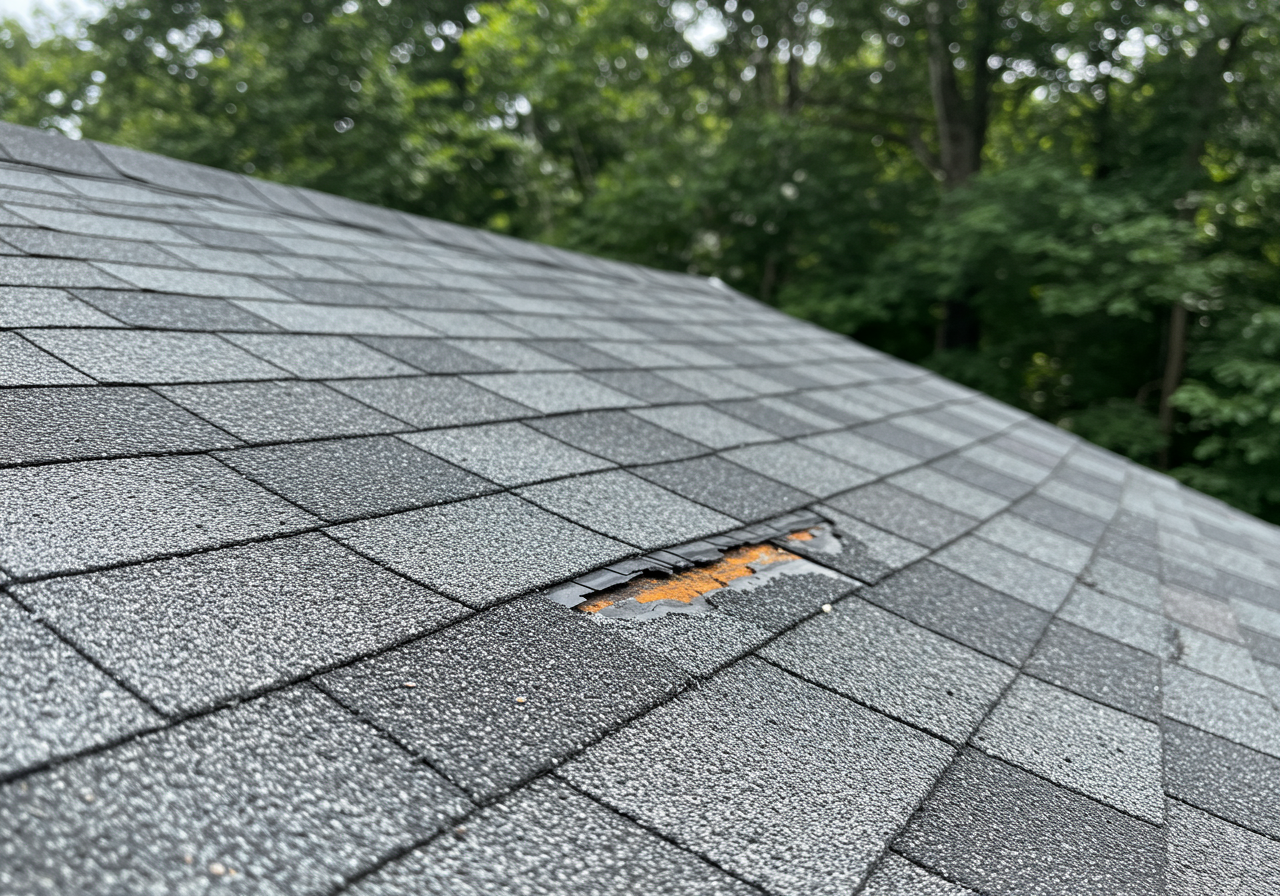
Roof Inspection in Hamden
Professional inspection reveals critical signs of roof decay including curling shingles, granule loss, and structural gaps that homeowners often miss.
The Gutter "Sand" Trap and Granule Loss
Have you ever cleaned your gutters and found what looks like heavy, dark sand at the bottom? I'm always surprised by how many people scoop that out and toss it without a second thought. Those granules are the only thing standing between the sun's UV rays and the waterproof asphalt mat of your shingle.
Think of granules like the sunscreen for your house. In Hamden, our roofs take a beating from both the summer sun and the abrasive weight of snow. When you see a significant amount of "balding" on your shingles, the asphalt underneath is exposed. It will bake, crack, and eventually leak. According to the Department of Energy, a roof that has lost its reflective granules also absorbs significantly more heat, which can send your AC bills through the roof (literally) during those humid July weeks.
Average Lifespan of Common Roofing Materials in CT
Light Where There Should Be Dark
If you really want to know the truth about your roof, you have to go where the spiders live. I'm talking about the attic. Grab a flashlight, but before you turn it on, just stand there for a minute. If you see pinpricks of light peeking through the roof boards, you have a problem.
Water follows the same path as that light. While a tiny hole might not cause a flood today, it's inviting moisture into your insulation and rafters. I remember a case study of a Cape-style home near Lake Whitney where the owners ignored a few "sunbeams" in the attic for three years. By the time they called someone, the plywood decking was so rotted it felt like walking on a trampoline. Before you get to that point, I always tell homeowners to verify their contractor's license and get a professional eye on the decking. It's much cheaper to replace shingles than it is to replace the entire wooden skeleton of your roof.
The Chimney and Flashing Connection
We often focus so much on the shingles that we forget about the "jewelry"—the metal flashing around chimneys, dormers, and valleys. This is where most leaks actually start. In older Hamden homes, you'll often find lead or copper flashing that has pulled away from the brick over time.
If you see rust or gaps in the sealant around your chimney, don't just slap some hardware-store caulk on it. That's a band-aid on a broken leg. The transition points are high-stress areas. If you have a modern home with a flatter section, refer to FEMA's guide on low-slope systems to see how those seals should be maintained. A failure here can let water travel down the inside of your walls, damaging drywall and electrical systems long before you see a stain on the ceiling.
Ground Inspection
Walk the perimeter with binoculars to check for lifted shingles or 'balding' spots.
Gutter Check
Look for excessive granule accumulation or shingle fragments after a heavy rain.
Attic Search
Check for water stains on rafters, damp insulation, or visible daylight.
Pro Assessment
Get a professional quote to determine if you need a patch or a full replacement.
The 20-Year Rule vs. Neighborhood Aesthetics
Sometimes, a roof looks "fine" from the street, but the calendar tells a different story. If your roof was installed around 2005 or 2006, you are officially in the danger zone. Most standard shingles are rated for 20-25 years, but in Connecticut, the reality is often shorter due to our wild temperature swings.
I've talked to families who wanted to wait "just one more year" to save up, only to have a February nor'easter force their hand. The stress of an emergency replacement is never worth it. If you're unsure if your roof is just ugly or actually failing, don't just take my word for it— see what other CT homeowners experienced when they decided to pull the trigger on a replacement. Often, the peace of mind (and the boost in curb appeal) is worth more than the cost of the project itself. Plus, a new roof is a great "conversation with the block," showing you care about the long-term health of your neighborhood.
Replacement vs. Repair
Pros
- Long-term peace of mind
- Improved energy efficiency
- Full warranty coverage
- Massive curb appeal boost
Cons
- Higher upfront investment
- Temporary construction noise
- Decision fatigue on colors
Get Your Free Roof Quote
Enter your zip code to get started
In the end, your roof is the primary protector of everything you love inside your home. Whether it's the original hardwood floors or the memories tucked away in the attic, they all rely on those shingles staying put. If you've noticed any of these red flags, the trick is finding a contractor who actually shows up and gives you a straight answer. Don't wait for the ceiling to start dripping; take a look today and stay ahead of the New England weather.