You're standing in your driveway on a misty March morning, perhaps just after grabbing coffee at the local Cumberland Farms, when you spot it—a single, grit-covered asphalt shingle lying on the patches of melting snow. It's a classic Thomaston moment. After a winter of Litchfield County ice dams and heavy slush, your roof is finally waving a white flag. But as you start scrolling through search results for "best roofing contractors," the anxiety kicks in. Who actually knows how to handle the unique microclimate of the Naugatuck River valley, and who is just a storm chaser with a shiny truck and a CT area code they bought last week?
Key Takeaways
- Local Expertise Matters: Contractors familiar with Litchfield County's freeze-thaw cycles understand specific underlayment needs better than coastal firms.
- Timing is Currency: March is the 'shoulder season' where you can often snag better pricing before the April rain-leak rush.
- Verify Beyond the License: Look for specific experience with steep-slope Colonial-style homes common in Thomaston's historic districts.
- Ventilation is the Secret: The best contractors prioritize attic airflow to prevent the ice dams that plague our hillside neighborhoods.
1. The "Mud Season" Advantage in Litchfield County
March in Thomaston isn't just about waiting for the clocks at the Seth Thomas factory to feel like spring again; it's a strategic window for roof work. Most homeowners wait until they see a puddle in the kitchen during an April nor'easter to call a pro. By then, the best crews are booked until July.
I've noticed that local crews are often looking to fill their schedules right now. If you can get an inspection before the ground fully thaws and the spring rains hit, you're in a much stronger position to negotiate. However, a "best" contractor won't just slap shingles on in any weather. They'll wait for a dry window where the adhesives can actually set. If a guy tells you he can roof during a misty Litchfield morning without a care, keep walking.
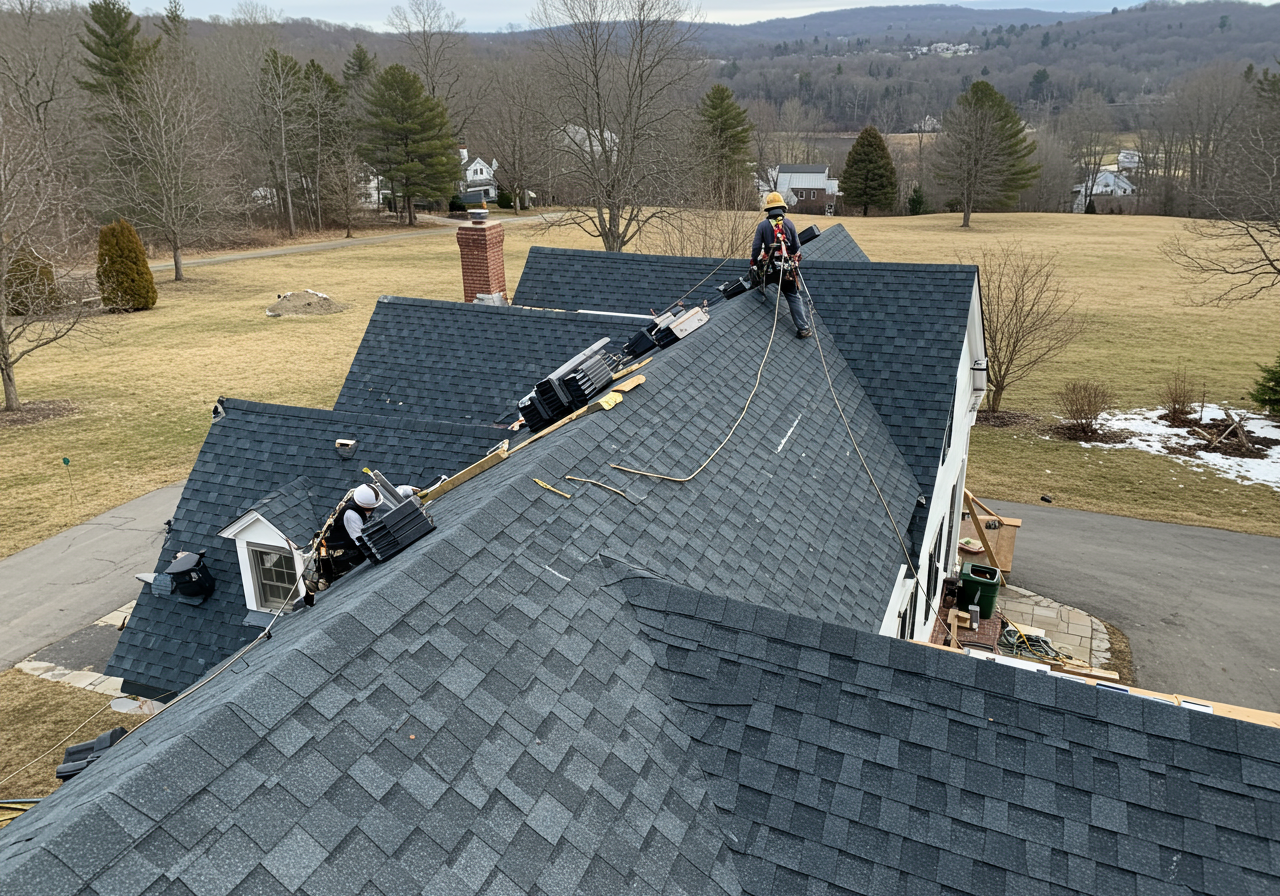
Thomaston Roofing in March
A Thomaston home showing strategic roof work during the mud season, highlighting the importance of timing and local expertise in Litchfield County.
2. Identifying "Real" Local Roots vs. Satellite Offices
We see it every year: trucks with out-of-state plates parked near Black Rock State Park. True Thomaston roofing experts don't just have a P.O. Box in Torrington; they have a physical footprint and a reputation built on surviving our specific weather patterns.
A contractor from the shoreline might not realize how much more wind-driven snow we get up here in the Northwest Hills compared to New Haven. When you're vetting roof replacement services, ask them about their recent projects on High Street or near the Naugatuck River. If they can't point to a roof they did three years ago that still looks pristine, they aren't the local experts you need.
Local Thomaston Pro vs. Out-of-State Storm Chaser
| Feature | Local Expert | Out-of-State Crew |
|---|---|---|
| Understands Litchfield Snow Loads | ||
| Physical Office within 20 Miles | ||
| CT-Specific Workman's Comp | ||
| Emergency Response Time (Same Day) |
3. The Ventilation Reality Most Estimates Ignore
The "best" contractors in Thomaston won't just talk about shingles; they'll spend twenty minutes in your attic. Why? Because our older Litchfield County homes are notorious for poor ventilation. If your roofer doesn't check your intake vents, they are setting you up for a massive ice dam disaster next January.
According to DOE insulation advice, proper attic airflow is the only way to keep your roof deck cool enough to prevent snow from melting and refreezing at the eaves. In Thomaston, where the hills create shadow pockets that keep snow on your roof for weeks, this isn't optional—it's a survival requirement for your shingles.
4. Navigating the March Pricing Maze
Don't let the "early bird" specials fool you. A low-ball estimate in March often means the contractor is cutting corners on high-quality flashing or ice and water shield. I always suggest homeowners use a roofing cost calculator to get a baseline before they start meeting with sales reps.
In Thomaston, a "fair" price for a standard architectural shingle roof usually falls between $11,400 and $18,200 depending on the pitch and layers. If someone quotes you $7,500 for a full tear-off, they are likely skipping the necessary permits or using sub-par materials that won't stand up to a Northwest Hills ice storm.
The 'Overlay' Trap
5. Material Choices for the Naugatuck Valley
Our valley location means we deal with higher humidity and lingering fog compared to the ridges. This can lead to unsightly blue-green algae streaks on your roof. The best contractors will suggest shingles with copper-infused granules (like StreakFighter technology) to keep your curb appeal high.
For those with flatter sections on their homes, perhaps a back addition or a garage, ensure your contractor follows FEMA's low-slope guide for moisture protection. Standard shingles on a low-slope roof are a recipe for a leak the first time we get a heavy March rain.
6. The "Hidden" Thomaston Permit Process
A top-tier contractor handles the paperwork. In Thomaston, the building department is thorough. If a roofer asks you to pull the permit, that's a massive red flag—it usually means they aren't registered with the state or are trying to dodge liability.
Make sure they are also thinking about energy efficiency. Research from EPA's cool roof data shows that even in cooler climates like ours, "cool" shingles can reduce attic temperatures by 30°F during those humid July weeks, saving you a bundle on AC costs.
7. Reading Between the Lines of the Labor Warranty
There is a big difference between a "manufacturer warranty" and a "labor warranty." Most shingles are "lifetime," but that doesn't cover the guy who didn't nail them in correctly. The best Thomaston contractors offer a minimum 10-year workmanship warranty.
Did You Know?
Over 70% of roof leaks in Connecticut occur at the 'flashing'—the metal bits around chimneys and valleys—not through the shingles themselves.
If you're currently dealing with a minor drip from a chimney, it might be worth looking into roof repair services rather than a full replacement, provided the rest of your deck is solid. A reputable pro will tell you the truth about which one you need.
8. Communication and the "Handshake" Standard
Finally, the best contractor is the one who actually calls you back. It sounds simple, but in the Litchfield Hills, "contractor time" can be frustrating. Look for someone who uses modern communication tools but still respects the local, neighborly way of doing business. If they can't give you a clear start date and a daily cleanup plan, they aren't the best for your home.
Get Your Free Roof Quote
Enter your zip code to get started
March is the time to get your ducks—and your shingles—in a row. By vetting for local expertise, insisting on proper ventilation, and ignoring the siren song of the lowest bid, you'll ensure your Thomaston home stays dry through the spring melt and beyond.
Don't wait for the next storm to realize your roof is failing. Take 60 seconds to see how Thomaston's top-rated, verified local contractors compare for your specific project.
FAQ

About Noah Knight
Verified ExpertNoah Knight is a Connecticut Weather & Climate Specialist who helps homeowners understand how New England's unique weather patterns affect their roofing systems. He combines meteorological knowledge with practical home maintenance advice.