March in Rocky Hill is that awkward bridge between the last slushy mess on Silas Deane Highway and the first real spring downpours. It's exactly when homeowners start noticing that one damp spot on the guest room ceiling that wasn't there in December. You call three contractors, get three quotes, and suddenly you're staring at a $13,700 price gap that makes no sense.
I've seen this movie before. Most roofing quotes are like a cheap iceberg; the part that actually sinks your budget is hidden beneath the surface. If you're looking at a "too good to be true" number, it's usually because the contractor left out the inevitable. In my years of auditing these bids, I've found that the lowest price often ends up being the most expensive after the "change orders" start flying.
Key Takeaways
- The Decking Trap: Always ask for a per-sheet price for plywood before the first shingle is pulled.
- Permit Transparency: Ensure the Rocky Hill building permit fee is a separate line item, not "included" in a vague overhead fee.
- Safety Standards: Verify the crew uses OSHA-compliant gear to avoid being liable for on-site accidents.
- Flashing Facts: Don't let a contractor "save you money" by reusing old chimney flashing.
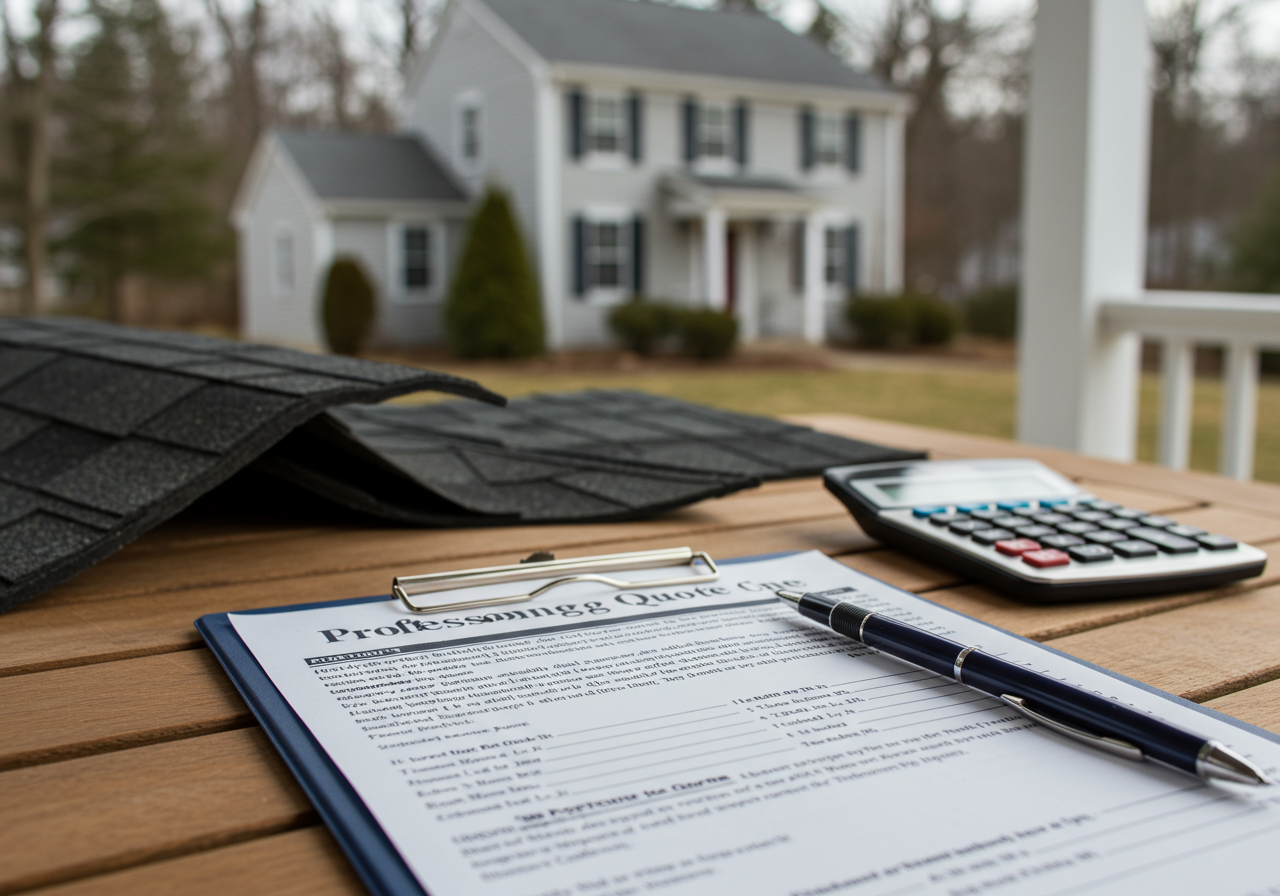
Hidden Costs in Roofing Quotes
Understanding what contractors don't always include upfront can save you thousands.
1. The Plywood "Gotcha": What's Under the Shingles?
Last year, I worked with a couple over near Dividend Road who got a "steal" of a quote at $11,400. Three hours into the tear-off, the contractor "discovered" that 18 sheets of plywood were rotted. He charged them $125 per sheet. Suddenly, that steal cost them an extra $2,250 they hadn't budgeted for.
In Rocky Hill, our older colonial and split-level homes often have original decking that hasn't seen the light of day in 30 years. You won't know it's rotted until the old roof is gone. A professional quote should clearly state how many sheets are included and, more importantly, what the "unit price" is for every sheet beyond that. If they won't put a price per sheet in writing now, they'll gouge you later.
Decking Replacement Price Transparency
| Feature | Vague Quote | Advocate-Approved Quote |
|---|---|---|
| Per-Sheet Cost | Not Listed | $85 - $105 |
| Included Sheets | 0 | First 2-3 Sheets |
| Labor Included? | Unclear | Yes |
| Written Guarantee | No | Yes |
2. Reusing Old Flashing: The $500 Shortcut That Costs $5,000
I see this constantly: a contractor tries to shave $600 off the bid by "inspecting and reusing" your existing copper or aluminum flashing. Here's my take: if you are spending five figures on a full replacement project, why would you rely on a 20-year-old piece of metal to keep the rain out of your chimney?
Flashing is the most common failure point in Connecticut roofs. According to the National Weather Service storm database, Hartford County sees enough high-wind events to rattle even the best-installed metal. If that old flashing has even a hairline crack or a loose nail fin, you'll be calling for a minor leak repair within two seasons. Demand new flashing at every wall, chimney, and valley.
"A quote that says 'reuse flashing where possible' is just code for 'I'm hoping I don't have to do the hard work of bending new metal.'"
3. The Rocky Hill Permit and Dumpster Shell Game
Don't let a contractor tell you that permits are "taken care of" without showing you the math. In Rocky Hill, permit fees are based on the value of the work. If a contractor pulls a permit for a $5,000 job when they're charging you $15,000, they are cutting corners with the town.
But it's not just the town hall fees. I recently saw a bid where the "dumpster fee" was listed at $850. For a standard 1,500-square-foot roof in Rocky Hill, a 20-yard dumpster shouldn't run you more than $450 to $550. Where is that extra $300 going? Probably into the contractor's pocket as a "handling fee." If you're struggling to fund a necessary repair, check the USA.gov home repair portal for potential assistance programs, but never let a contractor pad their margins with inflated third-party costs.
4. Why "Cheap" Labor Is a Liability Risk
If a quote is $4,000 lower than everyone else's, they are likely saving money on insurance or safety. I've seen crews in Hartford County working on 8/12 pitch roofs with zero harnesses.
If a worker falls off your roof and the contractor doesn't have proper workers' comp, guess who the lawyers look at next? You. I always tell my clients to look for a mention of OSHA fall protection standards in the contract. A professional crew factors the cost of safety—harnesses, roof anchors, and lanyards—into their bid. It might add $300 to the total, but it buys you peace of mind that a tragedy won't become your financial ruin.
The Liability Check
5. How to Audit Your Quote Like a Pro
Don't just look at the bottom line. You need to break the quote down into its DNA. I tell homeowners to use a cost-estimation tool to get a baseline before they even talk to a salesperson. This gives you the leverage to ask, "Why is your labor rate 40% higher than the regional average?"
When you have the physical quote in hand, follow these steps to ensure you aren't being taken for a ride.
Check the shingle brand and specific line
Verify you're getting the weight you paid for (e.g., CertainTeed Landmark vs. Landmark Pro).
Verify the 'Ice and Water Shield' coverage
In CT, code usually requires 6 feet from the eave up, but 9 feet is better for our ice dam season.
Look for the specific dumpster size and disposal weight limit
This helps avoid 'overage' fees later that can add hundreds to your final bill.
Ensure the warranty is clearly split
Material warranty (from the manufacturer) and workmanship warranty (from the contractor) should be separate and clearly stated.
Buying a roof in Rocky Hill shouldn't feel like a trip to a shady used car lot. If a contractor gets defensive when you ask for a line-item breakdown of the permit fees or the plywood unit price, that's your signal to walk away. You want a partner who respects your budget enough to be honest about the costs before the first nail is driven.
Get Your Free Roof Quote
Enter your zip code to get started
FAQ

About Dana Jackson
Verified ExpertDana Jackson is a Homeowner Advocate & Cost Analyst who helps Connecticut families navigate the financial aspects of roofing projects. She specializes in finding the best value and avoiding common pricing pitfalls.